Beware the Neighborhood Watchman

By Gary

I was recently discussing the Trayvon Martin / George Zimmerman case with David Marc, who is known for his books in the communications, but is also an astute political observer.  We were lamenting the fact that the legal case in Florida, and most of the media conversation, has focused almost exclusively on the question of whether Zimmerman acted in self-defense.  In a court of law in a state which has adopted “Stand Your Ground” legislation and the balance of justice is heavily tilted toward the person who pulls the trigger, this should not come as a shock.  But in the media, writers, reporters, and editors are not limited by the narrow prescripts of the law.  Their conversation need not be so blinkered; they are free (even obligated) to entertain broader concepts such as justice, ethics, and history.

David noted that in all the commentary regarding Martin’s murder (let’s call it what it is), no one, not even Al Sharpton, raised the history of Neighborhood Watch groups.  Zimmerman was not just a passing bystander; the sole reason for his presence on that Florida street was in the role of neighborhood watchman.  He was, in other words, looking for trouble.  In his armed defense of his turf, Zimmerman was following in the footsteps of the most notorious neighborhood watch group in U.S. history: the Ku Klux Klan.  Just like George Zimmerman, Klan members felt themselves to be protecting the safety of their neighbors and extending the arm of law and order.  And, just as many in the community have rallied to Zimmerman’s defense, the Klan was a fraternal organization that enjoyed broad support for much its history.  After a period of decline, which came after Jim Crow laws institutionalized the intimidation of Blacks, the Klan revived in the 1920s as a powerful anti-immigration, anti-Semitic, anti-civil rights group with an estimated 4 million members nationwide, many of whom participated in a massive march on Washington in 1925.  Only after decades of murder and mayhem did the Klan come to be seen by a majority of Americans as the terrorist organization that it was.

But is the Klan an extreme outlier, or merely the foremost example of a strain of violent vigilantism that runs through the history of the country?  There has always been a thin line in the U.S. between the reflex for self-preservation and self-determination on one side, and a faith in law and law enforcement on the other.  Anyone who has participated in a protest or committed an act of civil disobedience has crossed that line.  But such acts are borne of a profound (perhaps naïve) belief in the power of organized citizens to make things better by putting strategic pressure on the prevailing powers.  Amazingly few of such actions have been violent.  Protesters generally wish to improve the law, not take it into their own hands.  In other words, a protester may be an outlaw, but he/she is not a vigilante.

What is the difference?  The outlaw is driven to act by intolerable circumstances and takes only those measures which will restore the balance of fairness and justice.  Driven more by need than greed, he/she is likely to be an anti-war or environmental activist, a whistleblower, or just a shoplifter of food and clothing, but not a gun-toting bank robber or revolutionary, despite frequent media portrayals to the contrary.  He/she acts out of conviction or desperation, not fear.  The vigilante, by contrast, takes extra-legal action because he/she has allows fear of “the other” – someone of a different color, caste, or ethnic group – to overcome all restraint and empathy.

The great tragedy in the Martin/Zimmerman affair – beyond the murder of a teenager – is that Stand Your Ground, both the law and the mentality, has legalized and institutionalized vigilantism.   Stand Your Ground follows a long-established American tradition in which punishment is preferred to forgiveness, incarceration is stripped of opportunity for rehabilitation or redemption, and more energy is spent blaming victims than seeking social solutions.  It is a bold step toward a brutal, dystopian society in which fear and hatred are protected, and guilt or innocence is irrelevant.

But it is crucial to recognize that this is not an inherent human condition, a kind of survival of the fittest in which “fitness” is defined by who the quicker trigger finger.  Stand Your Ground doesn’t make our streets safer – quite the opposite – and it isn’t really intended to.  It is part of a larger campaign that seeks to maximize corporate profits, minimize public resources that cannot be monetized or exploited for competitive advantage.  Technically, Stand Your Ground is an extension of the so-called Castle Doctrine, which allows a person to use deadly force to defend their home.  But this law makes a radical leap.  This law is not about giving families the right to protect themselves, but creating a right for any White person with a pretext to shoot first and (maybe) ask questions later.

This break with legal and ethical tradition did not come as the result a grass roots movement, but is the product of a concerted campaign driven by an unholy alliance of three forces: gun manufacturers, the National Rifle Association (NRA), and the American Legislative Exchange Council (ALEC).  Seizing the opportunity afforded when Republicans established majorities in many state legislatures, ALEC drafted model Stand Your Ground legislation and, supported with millions of dollars from gun manufacturers and other ALEC member businesses, joined the NRA in lobbying for its adoption.  In a remarkably short time, Republican officials in 22 states adopted the law, often word-for-word, from the ALEC template.

Usefully, The Tampa Bay Times has conducted an extensive case review of Stand Your Ground claims.  Their research points unequivocally to the fact that the Zimmerman defense, which played shamefully on racist fears of young Black males, is consistent with most Stand Your Ground cases that come to court (remember, law enforcement wasn’t even going to bring charges against Zimmerman until there was an outpouring of outrage).  When the shooter is Black, conviction is likely; when the perpetrator is White, much less so.  In America, a young Black man is simply not free; even if he is minding his own business, he can be gunned down and then portrayed as a perpetrator.  As one blogger put it, Trayvon Martin was put on trial for his own murder…and found guilty.

 If fear is the animating force behind most vigilantism, the truly scary thing is that race-based fears are so broadly shared and widely condoned.  The Zimmerman case is not an isolated incident; the violence is not the result of personal vendetta, but of tribal warfare.  The Southern Strategy, perfected by staunch segregationists such as Strom Thurmond and Jesse Helms, and adopted almost whole in recent decades by the Republican Party, is based on planting fears among White Americans that their tenuous standing in society is threatened by Black people, immigrants, Jews, Muslims, or other “others.”  Recent demographic shifts only exacerbate these fears.  New voter suppression laws, which purport to fight a voter fraud problem that does not exist, are desperate attempts to maintain White supremacy by disenfranchising minority, immigrant, and student groups.

One might view these draconian laws on a superficial, Republican vs. Democratic, level.  But Stand Your Ground, Voter ID, and other so-called reforms aimed at reducing health care, privatizing education, or rolling back environmental and workplace protections, are part of a bigger power grab.  In each of these cases, the victims are either poor or sympathetic to those in poverty.  This divide, between those entrenched, moneyed powers (the 1%) who impose austerity, and the working stiffs (the 99%) who cling to their dreams of democracy even as their economic and social security is decimated, is a global problem that poses just as great a threat to the survival of the species as climate change.  Whether the agent is the Republican Party, the Tea Party, or the Klan, they are all doing the grunt work for the plutocrats. From their ranks will inevitably emerge vigilantes like George Zimmerman, a home-grown terrorist.
GUEST: Bill Moyer, co-founder and Executive Director of the Backbone Campaign, talks with us about the creative use of theater and spectacle in the resistance.

How to change the direction of our country from empire to constitutional democracy? Some countries have made the transition, but many have not. Empires always enrich the elite, but do so by first exploiting the rest of the world, and then by cannibalizing the home country.

Julius Caesar expressed his horror at what his fellow citizens had become. A few, very rich families owned everything, and everyone else lived on the breadline. Welcome to the New American Century.

Bill Moyer has found a way through his Backbone organization to resist our emerging dystopia. He does it with theater, satire, and a certain youthful bravado (see the projection on the Bank of America branch above).

Without fun, the revolution is a very stogy thing indeed. But theater brings more than that to our national discourse. It forces all of us to look at our surroundings in a different way. Instead of being inviolate, our banks can be exposed and even ridiculed for their constant lawlessness and overriding greed.

Break Up B of A! My hat is off to the Backbone Campaign!

http://youtu.be/6gIC66-sMlI

Consequences of our flawed reasoning


GUESTS: Members of the Two Row Wampum Renewal Campaign flotilla. We go to their encampment on the Hudson River.

I very much enjoyed my interviews at the encampment near Saugerties. I was impressed by the number of people in the flotilla, as well as their organization. There were hundreds of people being fed and entertained.

I also realized that my political thinking is somewhat restricted when compared to indigenous philosophy. Their subtile and polite message is that the "newcomers" to their world have been greedy and destructive, putting all life on earth in peril. In a way, their thinking is closer to the truth than so much of our political discourse. Our brightest minds are looking for a technological fix for our wasteful and self indulgent lives, so that we can continue living as we want. Many of us suspect that approach to be self deception. Our natural world is too complex for a new variety of GMO, a new oil pipeline or nuclear power plant to fix it. Our culture lacks the wisdom to save our species, and in our blindness will will destroy all life on earth.

Are indigenous peoples' warnings to be forever ignored until it is too late? Are they the Cassandra of our modern age, warning us of the catastrophic consequences of our flawed reasoning and hubris.

Why I Don't Support the Troops


Why I Don’t Support the Troops
Gary

During the anti-war protests of the late 1960s, there was a tendency on the part of young people to lump a lot of establishment players into the same basket.  If you were an elected official, a member of the military, or a policeman – heck, if you were over 30 years old – you were considered to be an enemy of peace.  Although I was never one who chanted “Hey Hey / Who Did You Kill Today,” I participated in rallies at which people did yell that -- and worse -- and it did not particularly bother me.  The only soldiers I came in contact with were those who had joined the protests and had not only concluded that the war was morally wrong and unwinnable, but often expressed a profound revulsion at the deeds they had performed under orders.  I don’t remember anyone suggesting that the people in the armed forces were more to be pitied than vilified.

When we hit the streets in early 1990, as it became clear that President Bush the elder was going to launch what is referred to as the Gulf War, it seemed in many ways to be a reprise of the 60s.  Many of the same players were on hand, many of the signs and rallying cries had been repurposed, and Pete Seeger was still strummin’ on the ol’ banjo.  It was a homecoming of sorts.  But there had been a significant shift in the attitude toward the men (and, increasingly, women) in uniform.   I think the change can be primarily attributed to a greater class consciousness.  Many of us came to view soldiers less as eager, bloodthirsty combatants than as cannon fodder.  While the draft had maintained at least a modicum of equality among the fighting forces, it had become clear that, although service was voluntary, the ranks were filled not only by gung-ho patriotic types seeking to be all they could be, in the words of the army advertisements, but increasingly by people for whom the military was the best of a limited number of bad choices.  The risk of getting killed or fighting a war that was hard to fathom, no less justify, was outweighed by the opportunity, often not available at home, to learn a skill, get an education, and earn respect.  No small things, especially if you are poor.

There was also a strategic (some might say self-serving) element in the tendency to be more supportive of the troops.  The protesters were not only older, and perhaps wiser, but held a standing in society that might be put at risk if they were perceived to be “unpatriotic” or “disruptive.”  Many anti-war activists were less inclined to be hated and marginalized as they had been in the 60s, when people used the word revolution openly, hopefully, and without irony.  Remember, neither the Tea Party, the Swift Boaters, nor Fox News existed in the 1960s.  There was a backlash against the hippies and peaceniks in the 60s, but it was overwhelmed by the zeitgeist.  The energies being poured into the anti-war movement were multiplied by those behind the civil rights, feminist, and sexual revolutions.  In recent years, as war as become a perpetual state, street protests receive scant coverage in the mainstream press, no less in the right wing echo chamber, and much of that energy, cross-fertilization, and public education simply does not take place.

But now, 13 years into the 21st Century, I’ve arrived at another re-calculation.  I do not support the troops.

Let me be clear (as the politicians like to say).  I support almost any individual in any context.  As my friends in the Reevaluation Counseling movement have taught me, most people do their best.  No one fucks up on purpose.  We form our opinions and make our decisions based on our background, orientation (political, sexual, philosophical), and experience.  We honestly believe that what we think and do is right.  So I try to approach any individual with an attempt to understand their thinking in their context.  This is not always easy to do, but it is an effort that can lead, if not to agreement, at least to greater communication and, hopefully, understanding.

But I seldom support people in the aggregate.  People gain confidence in groups, and unfortunately this is true even whether the organizing principle is peace and progress or if it is racism, sexism, or homophobia.  So I regard most groups with a great deal of skepticism, especially if they cause, or condone, a lot of harm.  When someone says "to make an omelet, you've got to break some eggs" I am generally opposed unless I am convinced that the short-term pain truly justifies the long-term gain.  This is no longer the case with war, if it ever was.  For the past half-century, the wars that the United States engages in fights have been immoral, of benefit to no one except the Military Industrial Wall Street machine.  As a result, I cannot support the men and women who are waging the wars.  Whether they are are on the front lines doing the killing or enabling it to happen in some supportive role, they are acting  in my name and I want them to stop.

Without these enlisted people, the gears of the war machine might not grind to a halt – after all, we now have private subcontractors and drones to assure that the killing will continue regardless – but it would certainly be less popular and less effective.  Obviously, a mass exodus from the military would require a massive shift in economic priorities -- we'd have to spend more on job creation and education than on weaponry and spying, for example -- but the alternative is not only perpetual war but a ruined economy, a moral quagmire, and a dying planet (the U.S. military is by far the biggest polluter in the world).  The peace dividend, which we've been promised ever since the end of the Vietnam War, is not just the absence of international hostilities, but a re-setting of priorities.
There's only one way to truly support the troops: bring 'em home.

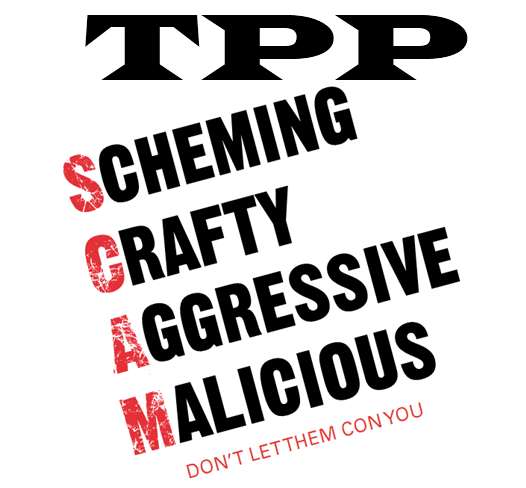
TPP SCAM


GUEST: Kevin Zeese, co-director of It's Our Economy, organizer of the National Occupation of Washington, and co-host of Clearing the FOG radio show, talks about capitalism in crisis.

Is it only me who is insulted by Obama's constant lying? He preached transparency, and is negotiating the Trans-Pacific Partnership trade deal in secret, so that people won't be enraged that he is going back on all his environmental and worker rights promises. 

I think Obama cares less about the truth than any leader we have had in the last few decades. Nixon seems to have lied compulsively, often to get himself out of a jam. But Obama lies with a sort of artistic flair, like he enjoys picking the right words to deceive his audience. Let's not forget that he ran on change, the very thing he was sure he would never deliver. He accurately perceived that the American people were hungry for a leader who actually cared about their issues. He crafted a perfect performance, seemingly without a thought about wether it was true or not. That is what leadership is like in the 21st Century American Empire.

Kevin's work is an inspiration to all those in our society hungry for someone to tell them the truth. We realize full well that in our society of universal deceit, "telling the truth is a revolutionary act." 


Right of the People to alter or to abolish


GUEST: Dr. Andrew Ross, professor of social and cultural analysis at New York University and author of Bird on Fire: Lessons from the World’s Least Sustainable City, talks about US debt and the fight for a fair economy. (prerecorded in Rhinebeck)

The subject of debt works nicely into our July 4th program. Much of US debt is illegitimate in that it was foisted on borrowers without any beneficial social outcome. Dr. Ross separated debt taken on for basic human services like education and healthcare from other types of financial obligations. The government should be paying for these services with our tax dollars, instead of bailing out the big banks, cutting corporate taxes to zero, and fighting wars abroad for US businesses. And the failure of our government to protect the people from the predatory corporations results in the type of "debt slavery" we see today.

"We hold these truths to be self-evident, that all men are created equal, that they are endowed by their Creator with certain unalienable Rights, that among these are Life, Liberty and the pursuit of Happiness. - That to secure these rights, Governments are instituted among Men, deriving their just powers from the consent of the governed, - That whenever any Form of Government becomes destructive of these ends, it is the Right of the People to alter or to abolish it, and to institute new Government, laying its foundation on such principles and organizing its powers in such form, as to them shall seem most likely to effect their Safety and Happiness."

How long will we endure a form of government that has so clearly failed its citizens? We don't have the tyranny of the British Empire to free ourselves from this time. More like the military/industrial/Congressional complex that the last truthful president we had warned us about.

The Reality Show

by Howard Winn


Image source: The Village Voice

I find no meaning in popular works about
zombies, human vampires, or extraterrestrial aliens,
nor even the legendary Texan chupacabra –
blood-sucker human flesh eating
monsters of the myths, ancient
and contemporary, even when written
by well-known authors to pander,
or to make the New York Times Best Seller List,
and pay for their next European tour,
not when
we have our very own investment bankers,
our hedge-funders, pyramid schemes,
insider trading, cold-calling predators,
off-shore tax havens, numbered bank accounts,
money-laundering, oligarchs, Russian
and other wise, bought elections
that subvert democracy to boot.
Reality is quite sufficient,
enough to raise the hairs on the back of the neck
in dread and distress.


Most recently Howard Winn had poems and fiction published in The Dalhousie Review, Descant (Canada), Cactus Heart, Main Street Rag, Caduceus, Burning Word,  Pennsylvania Literary Journal. Southern Humanities Review, Cutting Edgz and Borderlands. His B. A. is from Vassar College. His graduate degree is from the Writing Program at Stanford University. His doctoral work was done at New York University. He is a State University of New York faculty member.